
Domestic markets are also aided by a rally in the global markets with US market surging to record high and a firming trend at other Asian bourses.

The 30-share Sensex ended down 604 points at 28,845 and the 50-share Nifty ended down 181 points at 8,757. The Bank Nifty ended down 602 points at 19,146.

It may be a little early to cheer the recovery in the fast-moving consumer goods (FMCG) space as a deceleration in discretionary demand, after the festival season, may offset fragile rural recovery, analysts have cautioned. "The overall demand environment for staples remains muted, while discretionary demand trends have seen some deceleration after the festival season. "We believe margins in staples have bottomed out, but we expect only a gradual uptick with the ongoing softening in raw material prices.

Sensex zooms 200 points in Muhurat trading, Nifty regains 7,800.

JP Morgan has reiterated its negative stance on Indian information technology (IT) services and downgraded the sector to underweight (neutral earlier post Q4-FY23 numbers), as it believes the overall demand environment for the sector still remains weak. The research firm expects most companies in the sector to disappoint while announcing their first quarter numbers for the current fiscal (Q1-FY24). Among stocks, it has placed Infosys, TCS, MphasiS in its 'negative catalyst watch'.

The recent equity market weakness has sobered up investor mood, but the coming festive season is keeping analysts upbeat on stocks related to the consumption basket. Among the lot, fast-moving consumer goods (FMCG), retail, and consumer electronics segments are expected to do well over the next few months, and investors should thus selectively take bets in these pockets, analysts suggest. "We expect good volume growth for the FMCG sector during the festive season with some improvement in rural demand.

HDFC and Infosys contribute the most to today's rally.

Half the stocks in the Nifty 100 index have seen a reduction in their target price by analysts this year due to fears of lacklustre earnings growth and uncertain economic environment. Adani Green Energy, FSN E-Commerce (Nykaa), Adani Ports & SEZ and Indus Towers are among the companies that have seen the maximum cut in TPs during the first three months of calendar 2023, shows Bloomberg data. On the other hand, Canara Bank, JSW Steel and Bank of Baroda have seen the highest increase in TPs.

The stock of consumer goods major Emami has corrected nearly 3.5 per cent since its 52-week high of Rs 546.25. On August 29, the stock closed at Rs 521.90 on the BSE. After underperforming the Nifty FMCG index for a long time, the stock is now doing a catch up and surged over 13 per cent in the past one month.

Market participants are now awaiting Thursday's meeting of the European Central Bank
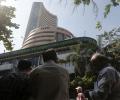
The BSE Midcap and the S&P BSE Smallcap indices outperformed to gain 0.6% and 1.1%, respectively
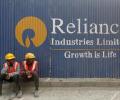
Shares of Reliance Industries jumped over 4 per cent on Friday, helping the equity benchmark indices finish the day with smart gains. A rally in the equity also added Rs 64,723.85 crore to the company's market valuation. The stock rallied 4.29 per cent to finish at Rs 2,331.05 on the BSE.

Indian equity markets had a good run in the first half of calendar year 2023 (CY23), with the S&P BSE Sensex and the National Stock Exchange Nifty50 hitting fresh 52-week highs. While the Sensex scaled up to a peak 64,718, the Nifty50 hit Mt 19,189. As the markets now prepare to enter the second half (H2) of CY23, all eyes are on global central banks, especially the US Federal Reserve, as to when they will pause and pivot as regards their interest-rate cycle.

The Sensex closed the day at 28,141, up 486 points, while Nifty50 settled at 8,716, up 155 points.

Nifty50 surged 145 points to close at 8,468 after hitting an intra-day high of 8,475.

Since March 31, 2022, the PSBs' market cap has risen 43.7 per cent, from Rs. 7.29 trillion to Rs. 10.47 trillion. It's time for the government, the majority owner of public sector banks, to reap the benefit of the rally in bank stocks, recommends Tamal Bandyopadhyay.

Banks stocks continued to trade weak along with FMCG major ITC.

India's largest listed pharmaceutical (pharma) company - Sun Pharmaceutical Industries (Sun Pharma) - is expected to maintain its outperformance vis--vis the sector's, as its multiple bets on specialty products, improving product mix, recent acquisitions, and branded business are finding favour with brokerages. While it has gained 7 per cent over the past year, the Nifty Pharma Index is down 13.6 per cent. Its outperformance over two years has been fairly evident, with the market leader gaining 66 per cent to Nifty Pharma's minus 1.4 per cent.

The RBI interest rate decision, industrial production data for June and the ongoing quarterly earnings from corporates would largely drive the stock markets this week, analysts said. Other major factors such as global market trends, the movement of oil prices and the trading activity of foreign investors would also influence trading, they added. "The market will have an eye on the RBI Monetary Policy Committee (MPC) meeting, which will be announced on August 10, 2023. We are heading towards the last batch of Q2 earnings of key companies such as Adani Ports, Coal India, Hero MotoCorp, Hindalco and ONGC, among others, which will lead to stock-specific movement," said Pravesh Gour, senior technical analyst, Swastika Investmart Ltd.

Bank shares were the top gainer in early trades with Bank of Baroda up over 4%.
An expectation of tax sops in Budget, weakness of dollar and robust tax collection are adding positive sentiment

In the context of market integrity, the IRAI and RBI should go over the minutes of the LIC and SBI board meetings when the decisions to invest in Adani equity or debt were taken, notes Jaimini Bhagwati, former World Bank treasury professional.
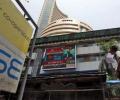
Broader market underperformed with the BSE Midcap and the BSE Smallcap indices losing up to 0.2%

After disappointing guidances in the first quarter (Apr-Jun) of the 2023-24 financial year (Q1FY24) and valuation downgrades, the Indian IT sector could see some positive repricing as the bad news for IT maybe easing in Q2FY24. A key negative factor was weaker demand from the US financial sector and from North America in general. The latest GDP (gross domestic product) estimates and sector-specific news suggest that the demand situation may not be quite so bad with a gradual recovery in tech spending in Q2.

'The market should maintain optimism on the back of range-bound oil prices, a robust fiscal balance sheet, a better-than-expected monsoon, and moderating inflation.'

Shares of RIL ended 2.4% higher as it pips TCS to become most valued firm

IT major Accenture's second straight cut in its revenue growth forecast for FY23 suggests there is more pain ahead for the Indian IT sector, say analysts. Accenture has lowered the top end of its FY23 growth guidance in constant currency (CC) to 9 per cent from 10 per cent earlier. The firm, which follows a September-August fiscal cycle, expects a 2-6 per cent CC growth in Q4 of FY23 (June-August 2023) versus the 6-10 per cent prior guidance.
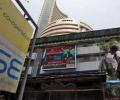
The S&P BSE Midcap and the S&P BSE Smallcap indices gained 0.3% and 0.5%, respectively

State owned banks SBI and PNB were the top Nifty gainers along with ICICI Bank and auto shares.

ICICI Bank was the top Sensex gainer after S&P Global Ratings affirmed its 'BBB-' long-term issue ratings on the senior unsecured bonds.
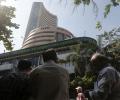
Asian shares ended higher following a relief rally in global equities after centrist candidate Emmanuel Macron won the first round of the French presidential election.

India Inc will report good set of numbers in Q4.

At an aggregate level, the late ace investor's portfolio that was valued at Rs 32,445 crore as on March 31, 2023 is now worth Rs 35,979 crore.

Mutual funds, as experts and custodians of another set of retail investors' savings, play a speculative game they are neither supposed to nor equipped to do, cautions Debashis Basu.

Sentiments took a hit after broader Asian markets weakened, following a renewed sell-off on Wall Street on Tuesday as energy shares dropped after crude oil prices plunged to a 13-month low amid weak earnings and US-China trade disputes, fuelling worries about economic growth

Equity benchmarks Sensex and Nifty ended over 1 per cent higher on Friday, helped by heavy buying in Infosys and banking stocks amid a rally in global stock markets. The 30-share BSE Sensex jumped 684.64 points or 1.20 per cent to settle at 57,919.97. During the day, it rallied 1,199.79 points or 2.09 per cent to 58,435.12.

Global funds, according to Christopher Wood, global head of equity strategy at Jefferies, are now beginning to pay more attention to India with the market now offering 30 companies with a market capitalisation over $25 billion.

Market breadth depicted strength. There were almost 3 gainers against every loser on BSE

ICICI Bank was the top loser after the private lender reported sharp drop in Q4 net.

Financial shares were among the top Sensex gainers along with auto and pharma shares.
 © 2026 Rediff.com - Advertise with us - Disclaimer - Privacy Policy - Sitemap - Feedback - About us - Terms of use - Grievances